Introduction
Most Australian homeowners assume paint is paint. Same tin, same brush, same result — right? Not quite.
When comparing interior vs. exterior paints, the differences go far beyond colour and finish. Interior and exterior paints are specifically formulated for different environments and performance requirements. Using the wrong type of paint can lead to peeling, fading, reduced durability, and even poor indoor air quality.
This guide explains the key differences between Interior vs Exterior Paints, helping Bendigo homeowners choose the right product for a longer-lasting finish. Whether you’re planning a renovation or searching for professional Interior vs Exterior Painting Services, understanding these differences can help you make the right decision for your property. Learn more about our Interior Painting Services in Bendigo.
Quick Answer: Interior vs Exterior Paints – What Is the Difference?
Interior vs Exterior Paints differ in their formulation, durability, and intended use.
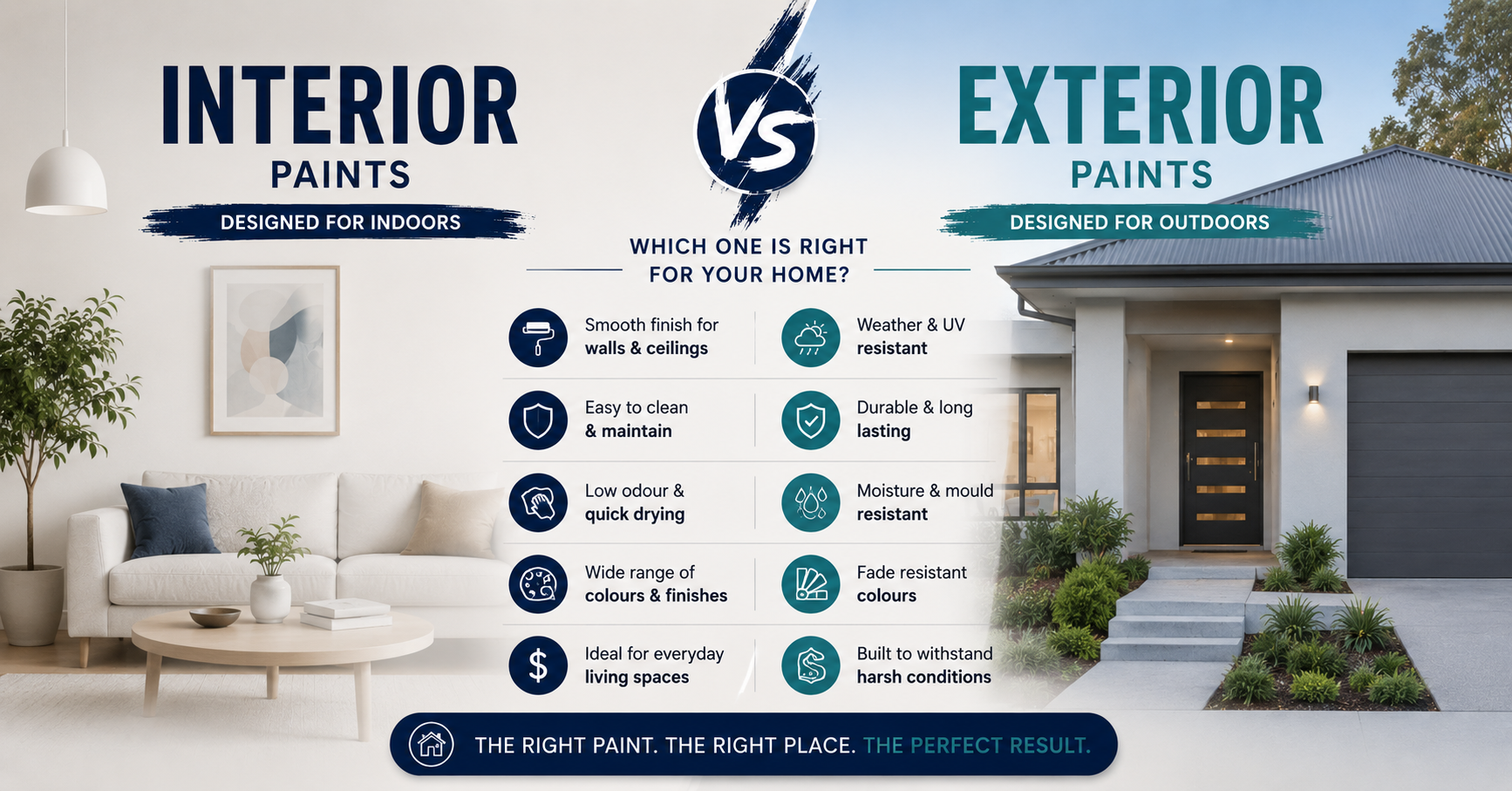
Interior paints are formulated for indoor surfaces, offering smooth, washable, low-VOC finishes for walls, ceilings, and trims.
Exterior paints are engineered to withstand UV exposure, moisture, and temperature fluctuations, using flexible resins and weather-resistant additives.
The two products are not interchangeable — using interior paint outside or exterior paint indoors creates serious durability and safety problems.
What Are Interior Paints?
Interior paints are specially formulated for surfaces inside homes and buildings. Designed for appearance, durability, and indoor air quality, they provide smooth coverage, rich colour, and easy cleaning. Because they aren’t exposed to harsh weather conditions such as UV rays, rain, or temperature fluctuations, their focus is on creating an attractive, low-odour finish that’s safe and comfortable for indoor living spaces.
Where Interior Paint Is Used
Interior paint is the right product for living rooms, bedrooms, kitchens, bathrooms, ceilings, interior doors, and trims. Moisture-resistant interior formulas are recommended for bathrooms and kitchens where steam and humidity are ongoing concerns.
Experienced Exterior Painters in Bendigo typically select exterior paint systems based on the surface material, weather exposure, and long-term protection requirements of the property.
What Are Exterior Paints?
Exterior paints are specially formulated to protect outdoor surfaces from harsh weather conditions, including UV rays, rain, wind, moisture, and pollution. They contain durable binders, flexible resins, and protective additives that resist mould, peeling, and fading. Their primary purpose is to shield surfaces from the elements while maintaining colour and appearance for years.
Where Exterior Paint Is Used
Exterior paint is designed for outdoor surfaces such as walls, brick and rendered facades, timber weatherboards, fences, garages, pergolas, decks, roofs, and fascias. Because each surface experiences different levels of sun, moisture, and weather exposure, using the right coating is essential. Our experienced Exterior Painters in Bendigo recommend the best paint system based on your property’s surface type and local weather conditions for long-lasting protection.
Interior vs Exterior Paints: Side-by-Side Comparison
When comparing Interior vs Exterior Paints, homeowners should focus on durability, weather resistance, surface compatibility, and maintenance requirements rather than colour alone.
| Feature | Interior Paint | Exterior Paint |
| Purpose | Aesthetics & indoor coverage | Weather protection & durability |
| Resin Type | Rigid, hard acrylic | Flexible, 100% acrylic |
| UV Resistance | Low | High |
| Moisture Resistance | Moderate (varies by formula) | High |
| Durability | Scuff & stain resistant | Weather & UV resistant |
| Flexibility | Low | High |
| VOC Level | Low or zero | Higher |
| Washability | High | Moderate |
| Colour Retention | Good indoors | Engineered for outdoor fade resistance |
| Best Applications | Walls, ceilings, trims | Facades, fences, decks, roofs |
| Cost (approx.) | Lower per litre | Higher per litre |
Choosing the Best Interior Paints in Australia & Exterior Paint Brands
Choosing the right paint brand is just as important as selecting the right colour. The Best Interior Paints in Australia offer low-VOC formulas, excellent washability, stain resistance, and a smooth finish, making them ideal for living rooms, bedrooms, kitchens, and hallways.
For outdoor projects, premium Exterior Paint Brands in Australia are formulated to resist UV rays, moisture, mould, and temperature fluctuations. These high-performance coatings help protect exterior walls, weatherboards, fences, decks, and rendered surfaces while maintaining their colour and finish for years.
When selecting interior or exterior paint, consider your home’s style, the local climate, and the level of durability required. A professional painter can recommend the most suitable paint brand and colour to ensure a beautiful, long-lasting result.
Key Differences Between Interior and Exterior Paints: A Complete Technical Breakdown
Understanding what separates interior from exterior paint goes beyond reading the label. The real differences lie in chemistry, performance engineering, and how each product behaves in its intended environment. Here’s every major difference explained in full.
1. Binders (Resins) — The Foundation of Every Paint Formula
The binder determines how paint adheres and performs over time.
Interior Paints
- Uses rigid acrylic or vinyl-acrylic resins
- Creates a hard, smooth, washable surface
- Designed for stable indoor temperatures
- Resists scuffs, stains, and frequent cleaning
Exterior Paints
- Uses flexible 100% acrylic resins
- Expands and contracts with temperature changes
- Prevents cracking and peeling outdoors
- Adheres well to brick, render, timber, and masonry
Key takeaway: Interior paint is built for hardness and washability, while exterior paint is built for flexibility and weather resistance.
2. Pigments — What Gives Paint Its Colour and How Long It Keeps It
Pigments determine a paint’s colour, opacity, and how well that colour holds up over time. Interior and exterior paints use fundamentally different pigment systems.
Interior Paints
- Uses organic pigments for richer, more vibrant colours
- Offers greater colour variety
- Limited UV resistance because sunlight exposure is lower indoors
Exterior Paints
- Uses inorganic pigments such as titanium dioxide and iron oxides
- Provides superior UV protection
- Retains colour longer in harsh sunlight
Key takeaway: Interior colours may look brighter, but exterior colours last longer under UV exposure.
3. Additives — The Hidden Ingredients That Determine Real-World Performance
Additives improve performance and protection.
Interior Paints
- Low or zero VOC formulations
- Smooth application with minimal splatter
- Optional mould resistance for kitchens and bathrooms
Exterior Paints
- UV stabilisers and mould inhibitors
- Dirt-resistant and self-cleaning properties
- Protection against algae, mildew, and moisture damage
Key takeaway: Exterior paints contain significantly more protective additives to withstand outdoor conditions.
4. Durability and Resistance — What Each Paint Is Built to Survive
While both paints are durable, they’re designed to withstand very different conditions.
Interior Paints
- Resist scuffs, stains, and frequent cleaning
- Perform well in stable indoor temperatures and humidity
- Maintain colour and sheen through regular household wear
- Not suitable for prolonged exposure to moisture or weather
Exterior Paints
- Withstand UV rays, rain, humidity, and temperature fluctuations
- Create a water-resistant barrier that helps protect surfaces from moisture damage
- Resist peeling, blistering, and weather-related deterioration
- Designed to perform in harsh Australian conditions year-round
Verdict: Interior paint is built to handle everyday household use, while exterior paint is engineered to withstand the elements. Each performs best in its intended environment.
5. Finish Options – Appearance vs. Practicality
The finish, or sheen level, affects a paint’s appearance, cleanability, and overall performance.
Interior Paints
- Available in a wide range of finishes, including flat, matte, low sheen, satin, semi-gloss, and high gloss
- Flat and matte finishes help hide surface imperfections
- Low sheen is popular for living areas due to its balance of appearance and cleanability
- Semi-gloss and gloss finishes are ideal for kitchens, bathrooms, doors, and trim
Exterior Paints
- Typically offered in low sheen, satin, and semi-gloss finishes
- Low sheen helps conceal surface imperfections and is the most common choice for exterior walls
- Satin provides a subtle sheen while maintaining durability
- High-gloss finishes are rarely used outdoors as they can highlight flaws and are more susceptible to cracking
Verdict: Interior paints offer greater design flexibility with a wider range of finishes, while exterior paints focus on practical sheen levels that deliver durability and long-term performance.
6. VOC Levels and Indoor Safety
VOCs (Volatile Organic Compounds) are chemicals released from paint that can affect indoor air quality and health.
Interior Paints
- Formulated with low or zero VOC levels
- Safer for indoor environments and occupied spaces
- Suitable for homes with children, pets, and sensitive individuals
- Allow rooms to be used sooner after painting
Exterior Paints
- Often contain higher VOC levels and stronger protective additives
- Include mould inhibitors and biocides designed for outdoor use
- Not intended for enclosed indoor spaces
Verdict: Interior paint is specifically formulated for safe indoor use, while exterior paint is designed for outdoor conditions. For health, safety, and air quality reasons, exterior paint should never be used indoors.
7. Surface Compatibility – Right Paint, Right Surface
Interior and exterior paints are formulated to bond with different surfaces and withstand different environmental conditions.
Interior Paints
- Designed for smooth, stable surfaces such as plasterboard, plaster, ceilings, MDF, timber furniture, doors, and trim
- Optimised for indoor environments with minimal exposure to moisture and temperature changes
- Available in specialised formulas for ceilings, trim, and high-traffic areas
Exterior Paints
- Formulated for rougher, more porous surfaces such as brick, render, masonry, weatherboards, metal, fences, and decks
- Provide stronger adhesion to withstand moisture, UV exposure, and temperature fluctuations
- Available in specialised products for timber, masonry, roofing, and other exterior surfaces
Verdict: Interior and exterior paints are engineered for different surface types and conditions. Using the correct paint ensures better adhesion, durability, and long-term protection.
8. Cost Differences – Why Exterior Paint Costs More
Interior Paints
- Generally more affordable due to simpler formulations
- Available in various finishes and specialised products for different rooms
- Premium low-VOC and washable options cost more but are still typically cheaper than exterior paints
Exterior Paints
- Cost more due to advanced resins, UV-resistant pigments, and protective additives
- Designed to withstand harsh weather conditions and provide long-term protection
- Higher-quality products often deliver better value by reducing maintenance and repainting costs
Verdict: Exterior paint carries a higher upfront cost because it is engineered to withstand weather, UV exposure, and moisture. When viewed as a long-term investment, premium exterior paint often delivers better value and durability over time.
How to Choose the Right Paint for Every Area of Your Home: Interior vs Exterior Paints Guide
Interior Painting Services in Bendigo
Our Interior Painting Services in Bendigo cover walls, ceilings, trims, feature walls, and complete home repaints. As trusted Interior Painters in Bendigo, we use premium low-VOC paints and thorough surface preparation to deliver a smooth, durable finish that looks great for years.
Interior Checklist:
- High-moisture area? Choose moisture-resistant paint.
- High-traffic room? Opt for a washable satin, semi-gloss, or gloss finish.
- Have children or pets? Select low or zero-VOC products.
- Creating a feature wall? Use premium paint for richer colour and coverage.
Exterior Painting Services in Bendigo
Our Exterior Painting Services in Bendigo are designed to protect homes from Central Victoria’s harsh weather conditions. As experienced Exterior Painters in Bendigo, we paint weatherboards, render, roofs, fences, decks, and exterior walls using premium weather-resistant coatings and primers.
Exterior Checklist:
- Exposed to direct sunlight? Choose a UV-resistant exterior paint.
- Painting timber? Use a flexible paint designed for expansion and contraction.
- Damp or mould-prone area? Select a moisture- and mould-resistant formula.
- Last painted over 10 years ago? Consider a complete repaint with primer for maximum protection.
By choosing the right paint for each area of your home, you’ll achieve a better finish, longer-lasting protection, and improved value from your investment.
Common Paint Mistakes Bendigo Homeowners Make
One of the most common issues encountered by both Interior Painters in Bendigo and Exterior Painters in Bendigo is the use of incorrect paint products for the intended environment.
- Choosing paint based on price alone: Cheap paints often lack UV protection and durability, leading to earlier repainting and higher long-term costs.
- Skipping the primer: Primer improves adhesion, seals surfaces, and significantly extends the life of the paint system.
- Using interior paint outdoors: Interior paint cannot withstand weather exposure and will quickly crack, peel, or fade.
- Painting in poor weather conditions: Excessive heat, humidity, or approaching rain can cause adhesion issues and uneven drying.
- Selecting the wrong finish: Choosing an unsuitable sheen can make surfaces harder to clean or highlight imperfections.
- Neglecting surface preparation: Proper cleaning, sanding, and repairs are essential for a durable, professional-looking finish.
Fresh Interior & Exterior Painting Trends for 2026
- Low-VOC and eco-friendly paints: Modern zero-VOC paints now deliver excellent durability and coverage while improving indoor air quality.
- Heat-reflective exterior coatings: Advanced coatings help reduce surface temperatures and improve energy efficiency during hot summers.
- Washable interior paints: New formulations resist stains and frequent cleaning without losing colour or finish quality.
- Longer exterior paint warranties: Improved paint technologies have led to professional systems backed by warranties of up to 15 years.
- AI colour visualisation tools: Homeowners can digitally preview paint colours on their property before making a final decision.
- Popular colour trends: Warm neutrals, earthy greens, charcoal exteriors, and soft whites are leading colour choices in 2026.
- Sustainable painting practices: Eco-friendly products, recyclable packaging, and waste-reduction methods are becoming industry standards.
Frequently Asked Questions
What should I consider when comparing Interior vs Exterior Paints?
When comparing Interior vs Exterior Paints, consider factors such as UV resistance, moisture protection, washability, VOC levels, durability, and surface compatibility. Interior paints are designed for appearance and indoor safety, while exterior paints are engineered for long-term weather protection.
What is the biggest difference between interior and exterior paints?
The formulation. Exterior paint uses flexible, UV-resistant resins and higher additive loads to withstand weather. Interior paint prioritises smooth, washable, low-VOC finishes for safe indoor use.
Which paint lasts longer?
Both are durable in their correct environment. A quality interior paint job lasts 10–15 years; a professionally applied exterior repaint typically lasts 7–12 years depending on conditions.
Why is exterior paint more expensive?
Exterior paints contain more advanced resins, UV blockers, mould inhibitors, and flexible additives – all of which increase production costs but also extend service life.
Do I need professional Interior or Exterior Painting Services?
Professional Interior vs Exterior Painting Services ensure correct paint selection, thorough surface preparation, and expert application. Hiring qualified Interior Painters in Bendigo or Exterior Painters in Bendigo can significantly improve the durability and appearance of your finished project.
How do professionals choose the right paint?
Experienced painters assess the surface type, exposure conditions, substrate condition, and client goals before specifying a paint system — not just a tin of paint.
Should homeowners hire professional painters in Bendigo?
For exterior projects and large interior repaints, yes. Professionals ensure correct surface preparation, product selection, and application technique — the three factors that determine how long any paint job lasts.
Conclusion
Interior and exterior paints may look similar, but they are designed for very different purposes. From resin technology and pigment composition to durability, safety, and weather resistance, each formula is engineered to perform in its intended environment. Choosing the right paint helps ensure better protection, longer-lasting results, and greater value over time.
If you’re planning a painting project in Bendigo, working with experienced professionals can make all the difference. Whether you need interior or exterior painting services, our team can help you select the right products and deliver a high-quality finish built to last. Contact us today for a free consultation and quote